Role of Artificial Intelligence AI in Healthcare and Medical Field: Now this is the era of machine learning and AI. Various fields in contemporary life including entertainment, day to day life, e-commerce, marketing, finance and banking and healthcare, AI is playing a vital role. This wealth of data can facilitate highly detailed personal profiling, which holds significant potential for behavioral insights and targeting, as well as for forecasting healthcare trends. If we see the uses of AI in healthcare sector then we can observe substantial advancements ranging from diagnostics to treatment. It is generally agreed that AI tools are created to assist and to eliminate errors in human work instead of replacing the jobs of many doctors and other healthcare workers.
Many individuals may not recognize that AI as a tool in various forms that influence everyday life. In the various areas of economy, where AI is rapidly advancing is healthcare, particularly in diagnostics and treatment management. In the era of growing population and unimagined pandemic like COVID 19, the need for a better healthcare services is needed at its best which is constantly growing though but there are some constraints like many nations are facing a shortage of healthcare workers, particularly doctors.
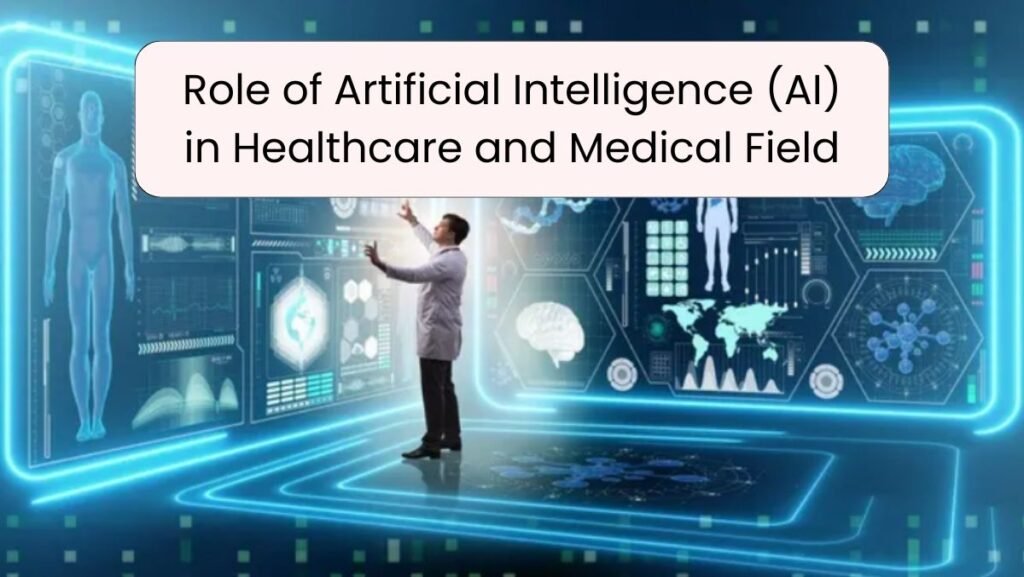
Artificial Intelligence AI in Healthcare and Medical Field
Probably with the digitalization process, each and everyone is using wireless technology and smartphones to avail any kind of services which has also added on-demand healthcare services through health tracking apps and search platforms. This has also led to a new way of delivering healthcare via remote interactions by which people can make it accessible anytime and anywhere. Such services are particularly beneficial for underserved areas and regions lacking specialists, as they help lower costs and minimize unnecessary exposure to contagious diseases at clinics. When it comes to creating a database of healthcare industry, AI needs to effectively analyze the data to ‘learn’ and create a network.
In healthcare database management system, there are two categories of data which is unstructured and structured. Structured learning consists three methods i.e. Machine Learning, Neural Network System, and Modern Deep Learning. While all unstructured data relies on Natural Language Processing. ML or Machine Learning method use the analytical algorithms to extract specific patient characteristics, which are collected during a patient visit with a healthcare provider including symptoms, medications, characteristics, such as physical exam findings, basic metrics, disease-specific information, diagnostic imaging, gene expressions, and various lab tests etc.
Then comes the supervision part of the learnings that is Modern Deep Learning, which is regarded as advancing beyond basic Machine Learning.In the case of Deep Learning, it uses the same data as Machine Learning but processes them differently through a computerized neural network, which is known as a hidden layer that organizes the information into a more straightforward output. This helps the doctors in summarizing multiple potential diagnoses to one or two outcomes, which helps them to get into a solid conclusion without any confusion. Then the unstructured data is analysed through NLP which are originates from clinical notes and speech-to-text documentation when a healthcare provider examines a patient. Employing these methods can lead to a more precise and effective diagnosis for a patient.
NEET UG Round 2 Counselling 2025 Registration Direct Link, Choice Filling & Seat Allotment
How AI Can Help In This Medical Field?
Let’s figure out how AI can help in this field. AI can be integrated into key disease areas. AI is being helpful in the areas like diseases of the patients with cardiovascular issues, neurological disorders, and cancer which is being the leading causes of death now these days. It is utmost important to utilize as many resources as possible for early detection, diagnosis, and treatment. The use of AI helps the patients and doctors in early detection by identifying any potential risk alerts that a patient might have. It can detect early stroke by following the algorithms based on their symptoms and genetic background to place them in an early detection phase.
With the help of early detection, the patient can get the trigger and can have further medical assessments like MRI/CT scan. The accuracy in this field is 87.6% in diagnosing and predicting outcomes. As a result practitioners could start treatment earlier and assess whether the patient had a higher chance of experiencing a future stroke. Similarly, machine learning was applied to patients who had a stroke 48 hours prior, achieving a prediction accuracy of 70% regarding the likelihood of another stroke. With the advancement of an AI tool the diagnosis of acute Kidney injury also can be detected.
Importance of AI in Healthcare Sector
This new approach to predicting and detecting acute kidney disease enables healthcare providers to identify the risk of renal disease well in advance. In the field of cancer research and treatment, AI has also made its greatest contributions especially in the field of radiation therapy. Previously the absence of a digital database in radiation therapy has complicated the process of cancer research and treatment. So many medical organizations are using a platform to help clinicians make better decisions about radiation therapy for cancer patients.
This platform gathers the patient’s medical information, examines the quality of care, provide better treatments, and offers insights on treatment results, data, and imaging. There are many companies, basically healthcare tech companies which have created AI solution that transforms electronic health records into a smart predictive tool by aiding Doctors in making more precise decisions. Through AI-driven applications the patients get help by maintaining their treatment plans and health results. So the healthcare apps engage the patients and also organise them. In terms of solvency, the AI-powered applications provide insights that enable care teams to be ready before any small cause turns into a larger issue. In India, NITI Aayog is collaborating with various healthcare tech companies to make it possible.
Probably we can say that the future of AI in healthcare is very bright. The overall ecosystem is beginning to recognize the value of AI-powered tools in the future of healthcare technology. We are witnessing the enhancement within the industries. It is helping in cost savings thorough adoption of AI applications.
Top Medical Colleges of India 2025 Courses, Admissions Fees and All
AIIMS NORCET 9 Admit Card 2025 Download AIIMS NORCET 9 Prelims Hall Ticket at aiimsexams.ac.in